
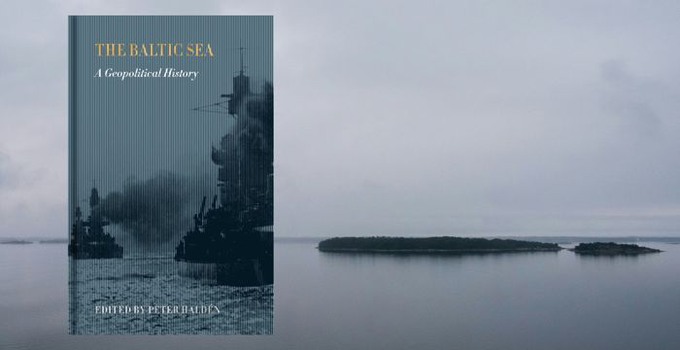
The geopolitical history of the Baltic Sea in a new light
For centuries, the Baltic Sea has been an arena for both conflict and cooperation. The new anthology The Baltic Sea – A Geopolitical History shows how the sea has shaped, and continues to shape, the political, economic and strategic relations between the countries of northern Europe.
The Baltic Sea is more than just a body of water; it is a place where power, trade, and ideas have intersected throughout history. The new anthology The Baltic Sea – A Geopolitical History brings together researchers from across the Baltic region to highlight how geopolitical relations across and around the Baltic Sea have evolved from the Iron Age to the present day.
“Understanding a sea is a way of understanding the relations between the states surrounding it. The Baltic Sea has always been both a boundary and a bridge, a place where cultures, ideas, and strategic interests meet,” says Peter Haldén, Associate Professor of War Studies at the Swedish Defence University and editor of the anthology.
From the Hanseatic League to NATO
The contributions in the anthology show how, throughout history, the Baltic Sea has been a lifeline for the societies around it – from Viking maritime routes and the Hanseatic trading network to the naval battles of the great power era and the Cold War’s closed and controlled maritime borders.
“The history of the Baltic Sea is a constant interplay between powers that have sought to close the sea and those that have wanted to keep it open. The Dutch and the English, for example, fought for free trade for a long time, while Sweden and Russia at various times sought to control maritime traffic”, says Peter Haldén.
Today, the Baltic Sea is once again at the centre of international politics. Never before have so many independent states bordered the sea, and all except Russia are now united within two blocs: the EU and NATO.
“We are living in a unique situation in which Sweden’s strategic position has once again changed. During the great power era, the focus was on securing communications across the Baltic Sea, and in some sense, we are there again”, says Peter Haldén.
The Baltic Sea as a geopolitical unit
The anthology is based on the idea that the Baltic Sea should be understood as a cohesive geopolitical unit and an arena where trade, culture, and military strategy have continually intersected.
“There are plenty of classic works on the Mediterranean as a unifying sea, but very few that treat the Baltic Sea in the same way. I wanted to bring together scholars from across the region to show how perspectives differ depending on where one views the sea from”, says Peter Haldén.
By combining historical and contemporary perspectives, the anthology places today’s geopolitical challenges in a longer historical context.
“For anyone interested in foreign policy and security, it is important not to forget the maritime dimension. The Baltic Sea has shaped Sweden’s history for millennia, and it remains central to our living conditions and our security”, says Peter Haldén.
Publication:
Peter Haldén (ed): The Baltic Sea – A Geopolitical History, Bokförlaget Stolpe.
More about
War StudiesPage information
- Published:
- 2025-11-27
- Last updated:
- 2025-11-27