
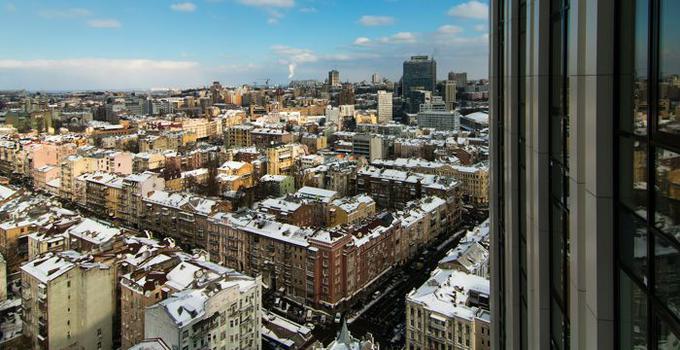
Ukraine and Europe's security in a new reality after four years of war
On 24 February 2026, four years will have passed since Russia’s full-scale invasion of Ukraine. The anniversary brings renewed focus to the war’s long-term trajectory, the prospects for peace and what the conflict means for European security.
“The war in Ukraine is not merely an ongoing military conflict; it is also part of a broader struggle over the European security order,” says Johan Huovinen, Lieutenant Colonel and Senior Lecturer in Strategy at the Swedish Defence University.
Although the war in Ukraine has at times receded from the centre of international debate, the fighting continues with great intensity. In recent months, Russian bombardments have had far-reaching consequences for Ukraine’s infrastructure, particularly in relation to heating, electricity and water supply.
“The war in Ukraine is still being waged at full scale. The targeted attacks on energy supply and other critical infrastructure are having a severe impact on the civilian population,” says Johan Huovinen.
At the same time, other international developments – including events in Gaza, Iran’s role in the region and the security policy debate concerning Greenland – have dominated media coverage. This does not, however, mean that the conflict in Ukraine has diminished in significance.
Talks under pressure
The question of peace remains central. Over the past year, attempts at talks between the parties have taken shape, with the United States acting as mediator.
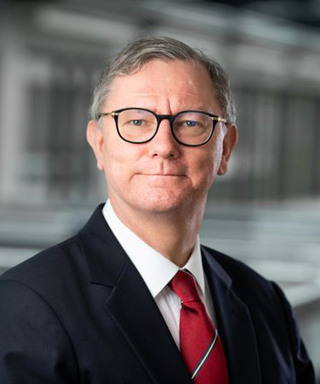
Johan Huovinen. Photo: Anders G Warne.
“For peace to be achieved, both parties must be prepared to sit down and engage in negotiations. What we are seeing now is Russia and Ukraine meeting at the negotiating table, but their starting positions differ markedly,” says Johan Huovinen.
Russia seeks an agreement that would entail significant concessions on Ukraine’s part, while Ukraine advocates a ceasefire as a first step, to be followed by negotiations.
“It is difficult to negotiate while hostilities are ongoing. A ceasefire would create better conditions for serious talks, but the gap between the parties remains wide,” he says.
Russia’s long-term ambitions
In the longer term, the conflict is not solely about Ukraine, but about Russia’s role in the international system.
“Since the fall of the Soviet Union, Russia has felt that it has been overshadowed by other major powers, above all the United States. Now Russia is seeking to reclaim a position as a central global actor, alongside the United States, China and the EU,” says Johan Huovinen.
This entails a broader power struggle encompassing everything from the economy and sanctions to nuclear balance and the security order in Europe.
“Russia is likely to continue attempting to position itself as a significant actor. At the same time, sanctions have had an impact and have affected the country’s economy, which in the longer term limits its room for manoeuvre.”
A peaceful resolution therefore does not appear imminent, but the need is considerable.
“The hope, naturally, is that a solution can be reached, not least for the sake of the Ukrainian population,” says Johan Huovinen.
Page information
- Published:
- 2026-02-20
- Last updated:
- 2026-02-22