Search

Search
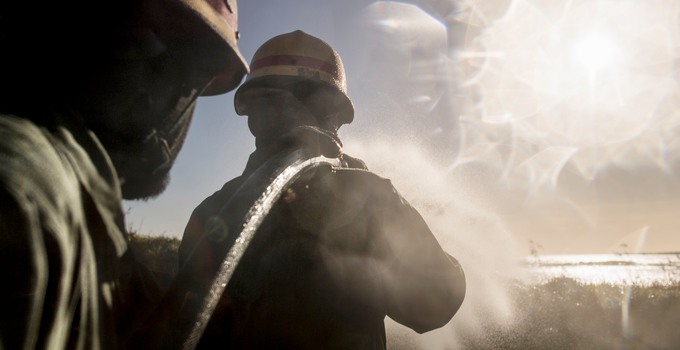
Militärer övar verkanstålighet, flottan.

Photo: Bezav Mahmod/The Swedish Armed Forces.

Leadership and command & control

The subject area of leadership and command & control concerns how people lead and organise activities in order to achieve shared objectives. It encompasses how individuals, groups and organisations coordinate resources, make decisions and influence one another in different situations.

The academic subject belongs to the social sciences and draws on knowledge from disciplines including behavioural science and design science. Research is driven by the challenges faced in defence, crisis management and security.

Perspectives on leadership and command & control

Leadership and command & control can be studied from many different perspectives. The research spans levels from the individual, group, and organisation to society at large, examining the conditions for leadership at different hierarchical levels before, during, and after operations, as well as leadership functions and technological support and how these interact within command systems.

Researchers study topics including:

  • leadership and command & control under demanding conditions
  • leadership and command & control theory
  • leadership development
  • inter-organisational collaboration
  • crisis management, stress and stress management
  • the design of command & control systems
  • teamwork
  • recruitment and selection
  • gender, ethics and methodological issues.

The research contributes knowledge that strengthens the development of defence, crisis management and security and gives the Swedish Defence University a distinctive profile in this field.

Current research projects

Some of the research projects conducted at the Department of Leadership and Command & Control are presented below.

The Swedish Armed Forces is expanding while the security environment continues to evolve. This places high demands on recruiting, selecting and retaining the right competencies.

Research projects within personnel supply, recruitment, selection and measurement theory generate knowledge that can strengthen the Swedish Armed Forces' long-term competence supply. Their aim is to improve methods for attracting, selecting and retaining the right personnel over time.

In a time of increasing uncertainty, effective leadership is essential for organisational performance and societal resilience. These projects examine different aspects of leadership and contribute knowledge that strengthens both civil and military defence in meeting future challenges.

The rapid expansion of the Swedish Armed Forces and increasing demands for operational capability place high demands on how activities are led and organised. These projects investigate key challenges and opportunities for development, contributing knowledge that strengthens the ability to lead, coordinate and develop military operations in both the short and long term.

  • Creating and exploiting command capability
    Contact: Ulrik.Spak@fhs.se
  • Defence will and organisational adaptability at Ukrainian universities
    Contact: Helena.Hermansson@fhs.se
  • Small uncrewed aircraft systems (SUAS) in the land domain
    Contact: Gisela.Backlander@fhs.se
  • The growth dilemma
    Contact: Aida.Alvinius@fhs.se
  • What implications do the air force's new air defence concept and technological developments have for the ability to command and control multi-domain operations in air defence?
    Contact: Ulrik.Spak@fhs.se

An effective total defence system depends on organisations from different sectors being able to work together efficiently before, during and after crises and conflicts. These projects examine different forms of collaboration and contribute knowledge on how cooperation and coordination can strengthen total defence capability.

The health and working environment of personnel are essential to the Swedish Armed Forces' long-term operational capability. These projects investigate various aspects of the working environment, stress and health in military settings, contributing knowledge that strengthens both personnel well-being and organisational effectiveness.

Ethics, morality and a shared set of values are fundamental to how individuals and organisations act. These projects examine these issues within the defence sector and contribute knowledge on how professional judgement and organisational culture can be developed to strengthen trust, cooperation and responsible conduct.

The Centre of Natural Hazards and Disaster Science (CNDS) conducts interdisciplinary research on natural hazards, disasters and society's capacity to prevent, manage and recover from crises. Its research integrates perspectives from the natural sciences, social sciences and engineering to enhance understanding of risks, vulnerabilities and resilience.

Current projects

  • Co-production in authoritarian regimes natural hazards and environmental risks and fragile peace efforts in Turkey’s Kurdish region
  • Justice in disaster risk governance
  • Slow responses to complex crisis: Rethinking crisis temporality and management
  • Unpacking and navigating complexity in disaster risk reduction
  • Water scarcity, disaster risks and justice for the Pataxó people in Bahia, Brazil
  • What we talk about when we talk about vulnerability: Bringing vulnerabilization to disaster risk reduction research
  • Governance of ecological sustainability and peace

The department hosts a number of doctoral research projects, including:

  • Cognitive ability, job demands and resources in relation to work- and health-related outcomes in a military context
    Contact: Emma.Oskarsson@fhs.se
  • Defence will among young adults
    Contact: Emelie.Wahlkrantz@fhs.se
  • Governing between war and peace: Governance and strategic planning in the Swedish Armed Forces
    Contact: Henrik.Borjesson@fhs.se
  • How is company commanders’ willingness to take initiative affected within the framework of mission command?
    Contact: Thomas.Vrenngard@fhs.se
  • Officer supply
    Contact: Roxanne.Hirvonen@fhs.se
  • The integration of the Swedish Armed Forces into NATO and its implications for leadership and command & control
    Contact: Linda.Jarl@fhs.se
  • Women in physically demanding military roles – legitimacy, belonging and boundary work
    Contact: Annika.Ohrnerlinden@fhs.se

Publications

Staff

Here you can search for employees at the Department of Leadership and Command & Control:

Share: